- DIRECT CONTACTS:
- info@atpa.africa

Uganda Launches National Cleaning Day
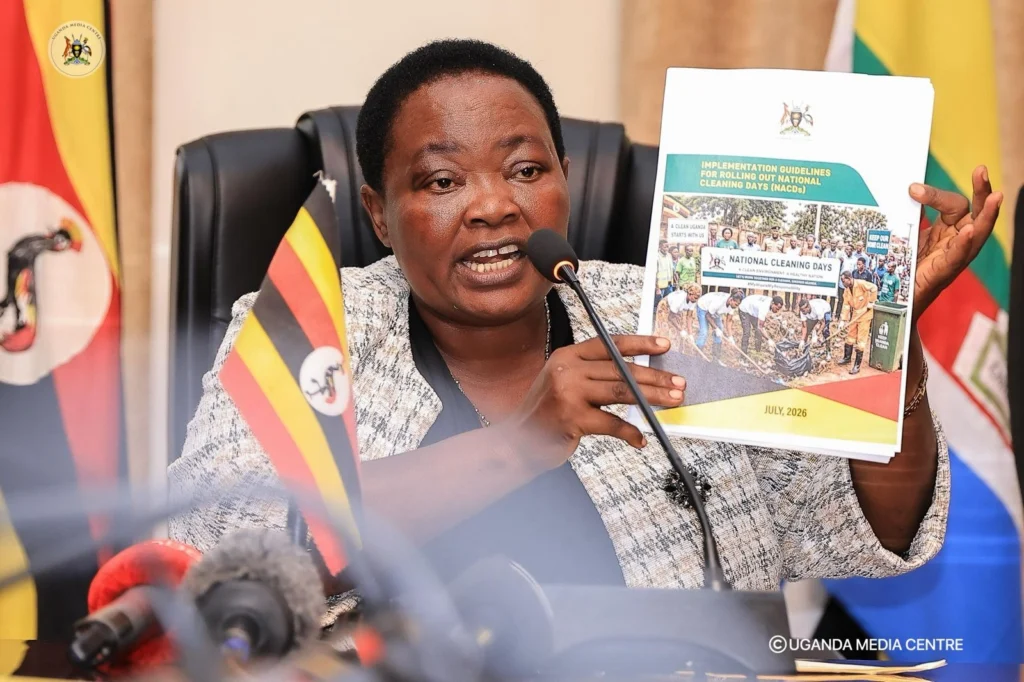
Uganda has officially launched its first-ever National Cleaning Day, a nationwide sanitation exercise that will now be held on the last Saturday of every month across the country. The inaugural exercise took place today, Saturday, July 25, 2026, running from 7:00 a.m. to 10:00 a.m., with the official launch ceremony held at Kiti Zone, Kisenyi III Parish, in Kampala’s Central Division.
As the continent’s tourism trade body, ATPA has been following the rollout of this initiative closely, and we are publishing this update both to inform our members and partners across the industry and to formally register our position on an issue that emerged on day one: the impact on travellers.
The initiative was officially declared open by Vice President Jessica Alupo, representing President Yoweri Kaguta Museveni, and was joined by Prime Minister Robinah Nabbanja, Second Deputy Prime Minister Rukia Nakadama, Cabinet ministers, Members of Parliament, officials from the Kampala Capital City Authority (KCCA), and representatives of the National Environment Management Authority (NEMA).
Addressing the crowd that gathered for the launch, Vice President Alupo described the initiative as central to the country’s development ambitions, noting that Cabinet had approved the programme in 2025 precisely because a clean environment underpins social and economic transformation. She urged citizens to treat cleanliness as a daily practice that begins at home and extends outward into the wider community, reminding Ugandans that the responsibility for a clean nation belongs to everyone, not just government institutions.
Prime Minister Nabbanja, who had announced the programme days earlier at the Office of the Prime Minister, was equally direct about the seriousness of the exercise. She described the three-hour window as non-negotiable, framing it as an order rather than a voluntary civic gesture. Her message was echoed by the Ministry of Health, where Minister Dr. Chris Baryomunsi called the programme one of the country’s most important preventive public health interventions, arguing that regular cleaning of drainage channels and proper waste disposal directly reduce disease outbreaks, lower healthcare costs, and improve overall quality of life for Ugandans.
How the Programme Works
Under the new Implementation Guidelines for Rolling Out National Cleaning Days, the last Saturday of every month is now designated as a mandatory countrywide clean-up period. During the three-hour window, non-essential movement of people and vehicles is restricted, businesses are required to stay closed, and all working-age residents are expected to take part in cleaning homes, neighbourhoods, markets, schools, health facilities, places of worship, roads, and drainage systems. Only emergency services and other formally exempted categories are permitted to operate during this time. The Uganda Police Force has confirmed it will strictly enforce compliance, warning that force may be used against those who defy the directive.
Government ministries, local authorities, schools, businesses, religious institutions, and civil society organisations have all been directed to appoint focal persons to coordinate participation, integrate the programme into their annual work plans, and submit implementation reports. Local governments were also tasked with identifying priority clean-up areas and mobilising communities ahead of each exercise. In view of concerns raised by leaders, including Kampala’s Lord Mayor, about the capacity of garbage trucks and disposal sites to handle the volume of waste generated, government has pledged to supply additional garbage trucks, gloves, and other equipment to local governments to support the programme going forward.
The concept is modelled closely on Rwanda’s long-running Umuganda, the community service exercise Rwanda has held on the last Saturday of every month for decades. Umuganda has become one of the most recognisable symbols of Rwanda’s national development story, credited with transforming Kigali’s streets and instilling a strong culture of collective civic responsibility. Uganda’s National Cleaning Day borrows the same monthly rhythm and the same spirit of shared responsibility, adapting it for the Ugandan context under the slogan “A Clean Uganda is Everyone’s Responsibility.”
Tourists Caught in the Cross-fire
While the launch was broadly welcomed as a positive step for public health and national image, its first outing exposed a significant blind spot: international travellers. Because the restrictions on movement applied broadly across the country, a number of tourists who were in transit toward the end of their trips, heading to Entebbe International Airport for early morning departures, found themselves stuck. Vehicles were kept off the roads for the full three-hour window, and with limited exemptions clearly communicated to transport operators and tour drivers, several visitors reportedly missed their scheduled flights entirely.
For an industry built on precision timing, connecting flights, and carefully sequenced logistics, a three-hour nationwide vehicle restriction landing squarely across the early morning departure window is no small disruption. Airport transfers to Entebbe typically require guests to leave lodges, hotels, or safari camps well before dawn to make check-in cut-offs for international flights, many of which depart Entebbe in the morning hours. With today’s exercise running until 10:00 a.m. and, in some official communications, guidance extending the restricted window to as late as 11:00 a.m. in future months, transport providers were left with no viable route to the airport for guests whose flights fell within or shortly after that period.
The result was a frustrating and, for some, costly experience: missed international connections, rebooking costs, disrupted onward travel plans, and the kind of last-minute chaos that no tour operator wants to explain to a client at the end of what should be a memorable trip to Uganda.
Our Position at ATPA
At the African Tourism Professionals Association, we want to be clear from the outset: we commend the Government of Uganda for this initiative. A clean and healthy Uganda is good for Ugandans, and it is good for the tourists who choose to visit. Cleanliness, sanitation, and public health directly shape how a destination is perceived internationally, and Uganda is right to invest in this. Destinations that are visibly clean, well-organised, and civically engaged send a powerful signal to the global travel market, and we recognise the seriousness and coordination that went into today’s launch.
At the same time, we must be equally clear about what went wrong on day one. We strongly encourage the authorities to exempt tourists, particularly those in transit to Entebbe International Airport or moving between destinations on fixed itineraries, from the movement restrictions. Missing an international flight because of a road closure is not a minor inconvenience. It can mean lost connections, additional costs, and a bruised final impression of an otherwise excellent trip, one that our members and their guests worked hard to plan and pay for.
This is not a new problem for our industry, and it is not one without precedent or solutions. Visitors on time-bound, pre-paid itineraries operate on schedules that rarely have flexibility built in. A missed flight from Entebbe does not simply mean a later departure; it can cascade into missed connecting flights in Nairobi, Addis Ababa, Doha, or Amsterdam, additional hotel nights, rebooking fees, and, for our member tour operators, reputational damage that outlives the inconvenience of a single Saturday morning.
We are encouraged that Rwanda, whose Umuganda programme inspired this initiative, has long made accommodations for exactly this kind of scenario. Tourists and visitors in Rwanda are generally not compelled to participate in Umuganda, and provisions exist to keep essential tourism-related movement, including airport transfers, functioning even on Umuganda Saturdays. Our recommendation to the Ugandan authorities is straightforward: adopt a similar carve-out. Allow tour vehicles, airport transfer vehicles, and travellers with documented onward international flights to move through the restricted window, ideally supported by a recognisable tourist transport permit or clearly branded vehicle exemption that police checkpoints can identify quickly at a glance.
Balancing National Priorities with a Growing Tourism Sector
Uganda’s tourism sector has been on a steady growth trajectory in recent years, with the country positioning itself as a premier destination for gorilla trekking, wildlife safaris, and cultural tourism in the Great Lakes region. Entebbe International Airport serves as the primary gateway for the vast majority of these visitors, and the smooth functioning of airport transfers is a quiet but essential piece of the tourism value chain. Any policy that inadvertently disrupts that gateway function, even with the best public health intentions, carries real economic and reputational costs.
At the same time, the public health rationale behind National Cleaning Day is difficult to dispute. Uganda, like many rapidly urbanising countries, continues to grapple with blocked drainage systems that trigger flooding, poor waste management in urban centres, and the disease burden that comes with inadequate sanitation infrastructure. A coordinated, government-backed monthly clean-up has genuine potential to address some of these long-standing challenges, and the enthusiasm shown by senior officials, cabinet ministers, and thousands of ordinary citizens who turned out for today’s launch suggests strong public buy-in, at least in its opening weeks.
The challenge for policymakers now is not whether to run National Cleaning Day, but how to run it in a way that does not inadvertently undercut one of the country’s most important economic sectors. Tourism exemptions of the kind ATPA is proposing would not weaken the programme’s public health objectives. If anything, a well-defined, clearly enforced exemption for airport transfers and tourist transport would demonstrate the kind of policy maturity that reassures both domestic stakeholders and the international travel trade that Uganda can pursue ambitious civic programmes without losing sight of its tourism commitments.
What Happens Next
With the first National Cleaning Day now behind it, attention turns to how quickly government departments, the police, KCCA, and the Ministry of Tourism, Wildlife and Antiquities can coordinate on a workable exemption framework before the next scheduled exercise on the last Saturday of August. Tour operators, airport transfer companies, and hospitality businesses across the country will be watching closely for updated guidelines that clarify whether tourist vehicles, guides, and travellers with confirmed international flights will be permitted to move freely during future editions of the exercise.
For now, the inaugural National Cleaning Day stands as a genuine, well-intentioned public health milestone for Uganda, and one that mirrors a model that has served Rwanda well for years. But its first outing has also surfaced a real-world tension between domestic policy goals and the practical realities of running an international tourism gateway. How Uganda resolves that tension in the coming weeks will say a great deal about the country’s ability to grow two of its most important national priorities, public sanitation and tourism, side by side rather than at each other’s expense.
At ATPA, we intend to stay engaged on this issue. We will be reaching out to the Office of the Prime Minister, the Ministry of Tourism, Wildlife and Antiquities, and the Uganda Police Force to formally raise our members’ concerns and to offer our support in designing a workable tourist exemption framework ahead of the next scheduled National Cleaning Day. We remain optimistic that this can be resolved quickly and constructively, in a way that protects both Uganda’s sanitation goals and its standing as one of Africa’s most compelling tourism destinations.
We will continue to keep our members and partners across the continent updated as this situation develops.
ATPA is the African Tourism Professionals Association, a continental trade body representing tourism operators, agencies, and professionals across Africa. This update draws on official statements from Uganda’s Office of the Prime Minister, the Uganda Police Force, the Ministry of ICT and National Guidance, and local Ugandan news coverage of the July 25, 2026 launch.