- DIRECT CONTACTS:
- info@atpa.africa

10 Must visit places in South Africa
10 Must visit places in South Africa. South Africa is a country that refuses to be summed up in one postcard. It is glacier-cold Atlantic surf breaking below a flat-topped mountain, red dust rising behind a herd of buffalo, vineyards folded into granite peaks, and a small prison cell that changed the course of a nation’s history. In the space of a single trip you can watch elephants at a bushveld waterhole in the morning and be tasting Chenin Blanc on a mountain-ringed terrace by evening. For a continent-wide association built on connecting travellers with the people who know Africa best, South Africa is one of the most rewarding chapters we get to introduce — and it’s a country our own African Destinations network is proud to champion alongside Uganda, Kenya, Rwanda, Tanzania, Botswana and the rest of the continent’s great safari nations.
South Africa also happens to be one of the more practical countries on the continent to travel around. English is one of eleven official languages and widely spoken alongside Afrikaans, Zulu, Xhosa and others, the road network connecting these ten places is generally excellent by international standards, and the rand’s exchange rate means that meals, accommodation and internal flights often stretch further here than in comparable destinations elsewhere in the world. That combination of variety, infrastructure and value is a large part of why South Africa remains one of Africa’s most-visited countries year after year.
Part of what makes South Africa such a rewarding destination is how well-organized its tourism infrastructure is. National parks are run by a single, professional authority; heritage sites are preserved and interpreted by dedicated custodians; provinces market themselves through official tourism boards with reliable, up-to-date visitor information. That means planning a trip here is refreshingly straightforward, provided you go to the right sources. Below, we’ve picked ten places that, together, capture the range of what this country offers — a mix of wildlife reserves, coastline, mountains, wine country and living history — and for each one we’ve pointed you to the official parks authority, tourism board or heritage body that actually manages it, so you can check current opening times, fees and conditions with confidence rather than relying on guesswork. For the bigger picture on visiting the country as a whole, South African Tourism is the official national resource worth bookmarking before you go, alongside the South African Government’s own tourism portal for visa and entry requirements.
1. Table Mountain National Park, Cape Town
No list of South African destinations can start anywhere else. Table Mountain rises more than a thousand metres straight out of the Atlantic, its flat sandstone summit visible from almost every corner of Cape Town and often capped by the rolling cloud locals call the “tablecloth.” A rotating cable car will take you to the top in under ten minutes, but the mountain rewards those who hike it too — routes like Platteklip Gorge climb directly from the city bowl, while Skeleton Gorge and Kasteelspoort wind up through indigenous forest from Kirstenbosch and Camps Bay respectively. Either way, the view from the top, across the city bowl, Robben Island and the curve of the peninsula, is one of the great urban panoramas anywhere in the world.
The national park itself stretches far beyond the summit, running the length of the Cape Peninsula down to Cape Point, where the cold Atlantic and warmer Indian Ocean currents meet in dramatic fashion. Along the way you’ll pass Boulders Beach, home to a protected colony of African penguins, and kilometres of fynbos-covered slopes that form part of the UNESCO-listed Cape Floral Region Protected Areas, one of the richest floral kingdoms on Earth despite covering a fraction of the planet’s land surface. Cape Point itself, with its lighthouse and cliff walks, makes an easy half-day add-on to a Peninsula drive.
Because the park is managed as a working conservation area, conditions and access can change quickly with weather — the cable car closes in high wind, and hiking trails can be affected by seasonal fire management — so it’s worth checking current opening times and trail status directly on the SANParks Table Mountain National Park page before you set out, and the official Cape Town Tourism site for city-wide planning, transport and seasonal events around the mountain. Most visitors find that a full day is enough for the summit and cable car, but hikers should budget half a day just for the climb up, and sunset is consistently rated the best time to be on top, weather permitting. October to April, the Cape’s warm, dry summer, gives the highest odds of clear skies, though the mountain can close its cableway on short notice even in good weather if the famous “tablecloth” cloud rolls in unexpectedly.
2. The Cape Winelands: Stellenbosch and Franschhoek
An hour inland from Cape Town, the mountains fold into a patchwork of vineyards that has been producing wine since Dutch settlers planted the first vines in the late seventeenth century. Stellenbosch, South Africa’s second-oldest town, anchors the region with oak-lined streets, Cape Dutch architecture, and a wine route dense enough that you could spend a week working through it and still not see everything. Franschhoek, founded by French Huguenot refugees, brings a distinctly gourmet edge, with some of the country’s most celebrated restaurants sitting alongside cellars producing world-class Cap Classique sparkling wine, Chenin Blanc and Cabernet Sauvignon.
What makes the Winelands special isn’t just the wine, though — it’s the setting. Vineyards climb toward the jagged Jonkershoek and Simonsberg mountains, and many estates pair tastings with hiking trails, art collections, and restored seventeenth and eighteenth-century manor houses open to visitors. Beyond Stellenbosch and Franschhoek, the wider region takes in Paarl, Wellington and the Constantia valley on Cape Town’s own doorstep, meaning you can dip into wine country on a half-day trip or make it the centrepiece of a multi-night stay.
For an authoritative overview of the appellations, grape varieties and routes across the whole wine-producing region, Wines of South Africa (WOSA) is the official industry body’s resource, while Visit Stellenbosch, the town’s official tourism office, is the best starting point for maps, accommodation and seasonal festival dates. If you’d rather have a specialist handle the logistics — cellar reservations, transport between estates, and pacing a tasting day sensibly — several of the member operators listed under our tour companies directory, including South Africa-based Pembury Tours, an ATPA member operating across Southern and Eastern Africa since 1996, build multi-day Winelands itineraries as part of broader South African journeys. Harvest season, typically January through March, is a particularly lively time to visit, with several estates hosting festivals and open-cellar events timed around the grape picking.
3. Robben Island
Five kilometres off the Cape Town coast, Robben Island is one of the most sobering and important sites in South Africa. For more than three centuries the island was used to isolate people the authorities of the day wanted kept away from the mainland — lepers, psychiatric patients, and, most famously, opponents of apartheid, including Nelson Mandela, who spent 18 of his 27 years in prison here. The maximum-security block, the lime quarry where inmates were forced to labour and where Mandela’s eyesight was permanently damaged by the glare, and Mandela’s own small cell are preserved almost exactly as they were, and tours are led by former political prisoners themselves, giving the visit a weight and authenticity that few historic sites can match.
Access is tightly controlled: visitors travel by ferry from the Nelson Mandela Gateway at the V&A Waterfront in Cape Town, and tours run on a fixed schedule managed entirely by the island’s custodians, combining a bus tour of the island’s sites with a walking tour of the prison itself. Because capacity is limited and demand is high in peak season, it’s essential to book ahead through the Robben Island Museum, the official body responsible for preserving the site and running all tours. The island’s global significance is recognised by its status as a UNESCO World Heritage Site, and the full citation and supporting documentation are available on the UNESCO World Heritage Centre’s Robben Island listing. Sailings are frequently affected by wind and swell and can be cancelled at short notice, so build flexibility into your Cape Town itinerary around this visit rather than scheduling it for your last available day. The full experience, including the ferry crossing both ways, typically takes three to four hours, and advance online booking is strongly recommended over trying to arrange it on the day.
4. The Garden Route
Stretching roughly 300 kilometres along the southern coast between Mossel Bay and Storms River, the Garden Route earns its name honestly: it strings together ancient indigenous forest, dramatic river gorges, lagoons, lakes and long stretches of unspoiled beach into one of the most scenically varied road trips on the continent. Towns like Knysna, built around a lagoon famous for its resident population of endangered Knysna seahorses, and Plettenberg Bay, with its wide beaches and whale-watching in season, are natural stopping points, while the ancient forests around Tsitsikamma shelter some of the tallest trees in Africa, including centuries-old yellowwoods.
Much of the route’s most protected terrain now falls under a single, consolidated conservation area, the Garden Route National Park, which links the old Tsitsikamma and Wilderness sections along with the Knysna forests into one management zone. Activities range from gentle canopy walks and lagoon boat trips to the Bloukrans Bridge bungee jump, one of the highest commercial bungee jumps in the world, and the Otter Trail, a multi-day coastal hike considered one of South Africa’s classic long-distance trails and usually booked out months in advance. Storms River Mouth, with its suspension bridge over the river gorge, is one of the most photographed spots along the entire route.
Because permits, accommodation and trail bookings within the park are managed centrally, it’s worth checking availability directly through SANParks’ Garden Route National Park page well ahead of your trip, particularly over the December and Easter school holidays when demand from South African domestic travellers is at its highest and prime accommodation sells out early. Most visitors allow a minimum of three to four days to drive the route without rushing, longer if forest hikes or the Otter Trail are on the agenda, and a rental car remains the easiest way to cover the distances involved, since public transport along the route is limited.
5. Addo Elephant National Park
Addo, in the Eastern Cape near Gqeberha (formerly Port Elizabeth), tells one of South Africa’s better conservation comeback stories. The park was established in 1931 to protect a population that had dwindled to just eleven elephants after decades of hunting; today it protects more than 600, along with the full Big Five — lion, leopard, buffalo, rhino and elephant — plus a healthy population of the endangered flightless dung beetle that gave the reserve some of its earliest conservation attention and still has its own protected road-crossing signs. Because it sits in a malaria-free zone, Addo is a particularly popular choice for families and for travellers who want a genuine Big Five safari without the additional health precautions required further north and east in the country.
Self-drive access is excellent, with well-maintained gravel loops that bring you close to elephant herds at waterholes, especially in the dry winter months from May to September when animals concentrate around permanent water sources. Guided game drives and night drives run alongside the self-drive network for visitors who want expert spotting and interpretation, and a marine and coastal section near Woody Cape adds dune hiking and whale-watching to the park’s more traditional bushveld offering. Current road conditions, gate times and the latest sightings information are maintained by the park’s managing authority on the SANParks Addo Elephant National Park page.
Addo is also a good example of the kind of long-term species protection work our own Environment Protection initiative exists to support across the continent, and we’d encourage any conservation-minded traveller to read up on the park’s ongoing elephant and rhino monitoring programmes before visiting, and to consider operators who contribute directly to that work. Most visitors pair a day or two in Addo with time in nearby Gqeberha, which has its own beaches and a regional airport that makes the park easy to reach without backtracking through Cape Town or Johannesburg.
6. Durban and the KwaZulu-Natal Coastline
Durban is South Africa’s most tropical major city, and its character reflects that: warm Indian Ocean water year-round, the country’s largest port, a skyline mixing colonial-era buildings with modern towers, and the biggest ethnically Indian population outside India itself, which shows up vividly in the food, especially the city’s famous bunny chow and the spice markets of the Victoria Street area. The Golden Mile promenade runs along the main beachfront with surf schools, craft markets and pier walks, while uShaka Marine World anchors the southern end with an aquarium built around a shipwreck theme and a full water park attached.
Durban also makes an excellent base for exploring the wider KwaZulu-Natal coast, from the surf towns of the North Coast, including Ballito and Umhlanga with their own stretches of blue-flag beach, to the wilder, quieter shoreline heading south toward the Wild Coast border. The city’s subtropical climate means it’s a viable year-round beach destination even when the Cape is cool and rainy in winter, and warm-water surfing conditions hold for most of the year. For events calendars, beach safety information, accommodation listings and current visitor guidance, Durban Tourism, the city’s official tourism marketing organisation operating under the eThekwini Municipality, is the most reliable starting point, and it pairs well with the itinerary-building tools in our own tours section if you’re combining coastal time with an inland safari further west. King Shaka International Airport connects Durban directly with Johannesburg, Cape Town and a growing number of regional and international routes, making the city a genuinely practical entry or exit point for a wider KwaZulu-Natal itinerary.
7. iSimangaliso Wetland Park (St Lucia)
Further up the KwaZulu-Natal coast, iSimangaliso — a Zulu word meaning “miracle” or “wonder” — protects South Africa’s third-largest estuarine system and one of the most ecologically diverse stretches of coastline on the continent. Within a single, connected park you’ll find coral reefs, the country’s largest freshwater lake system, ancient coastal dunes among the tallest forested dunes in the world, savannah, wetlands and dense coastal forest — enough habitat variety that the park shelters everything from hippos and Nile crocodiles to nesting loggerhead and leatherback turtles and, offshore, migrating humpback whales in season, alongside more conventional Big Five game viewing in its western sections.
The small town of St Lucia sits at the park’s gateway and makes a relaxed base for boat cruises on the estuary in search of hippo and crocodile, guided turtle-watching walks between November and March, snorkelling and diving trips out to Sodwana Bay’s reefs, and 4×4 excursions along Cape Vidal’s beaches. iSimangaliso was South Africa’s first UNESCO World Heritage Site, recognised for the exceptional range of ecosystems packed into one protected area — the full listing and significance criteria are documented on the UNESCO World Heritage Centre’s iSimangaliso page. Day-to-day management, permits and the latest conservation updates come directly from the iSimangaliso Wetland Park Authority, the statutory body established specifically to run the park, and their site is the best place to confirm seasonal turtle-tour dates and access conditions before you travel. St Lucia sits roughly two and a half hours north of Durban by road, making it a comfortable stand-alone stay or an easy add-on to a wider KwaZulu-Natal itinerary that also includes the Drakensberg further inland.
8. The Drakensberg Mountains
The Drakensberg — “Dragon Mountains” in Afrikaans, uKhahlamba or “Barrier of Spears” in Zulu — forms the highest mountain range in Southern Africa, a basalt escarpment running along the border between South Africa and Lesotho with peaks exceeding 3,000 metres. The scenery is genuinely alpine: jagged amphitheatres, waterfalls dropping hundreds of metres, and valleys that shift from green pasture to bare rock within a short hike. The Amphitheatre in Royal Natal National Park and the Tugela Falls, one of the tallest waterfalls in the world, are among the most photographed spots, but the range rewards multi-day hikers just as generously as day visitors, with trails and passes suited to everything from gentle valley walks to serious mountaineering.
The Drakensberg is also one of the richest rock art landscapes on Earth, holding thousands of San (Bushman) rock paintings, some more than 2,000 years old, which document a way of life and a cosmology that predates written South African history by millennia and can be viewed on guided walks to several accessible sites. This combination of exceptional natural beauty and cultural significance earned the range its joint listing, together with adjoining protected areas in Lesotho, as the UNESCO Maloti-Drakensberg Park World Heritage Site — one of relatively few sites worldwide recognised for both natural and cultural criteria.
On the South African side, the reserves are managed by Ezemvelo KZN Wildlife, the provincial conservation authority, whose site carries current hiking permit requirements, weather warnings and accommodation within the reserves — essential reading, since Drakensberg weather can turn quickly even in summer, with sudden thunderstorms and, in winter, snow on the higher passes. Popular bases include the Amphitheatre area near Royal Natal, and the southern Sani Pass region, where a 4×4 track climbs into Lesotho itself. The cooler, drier months from April to September generally offer the clearest hiking conditions, while summer brings green scenery but a much higher chance of afternoon storms on exposed ridgelines.
9. Kruger National Park
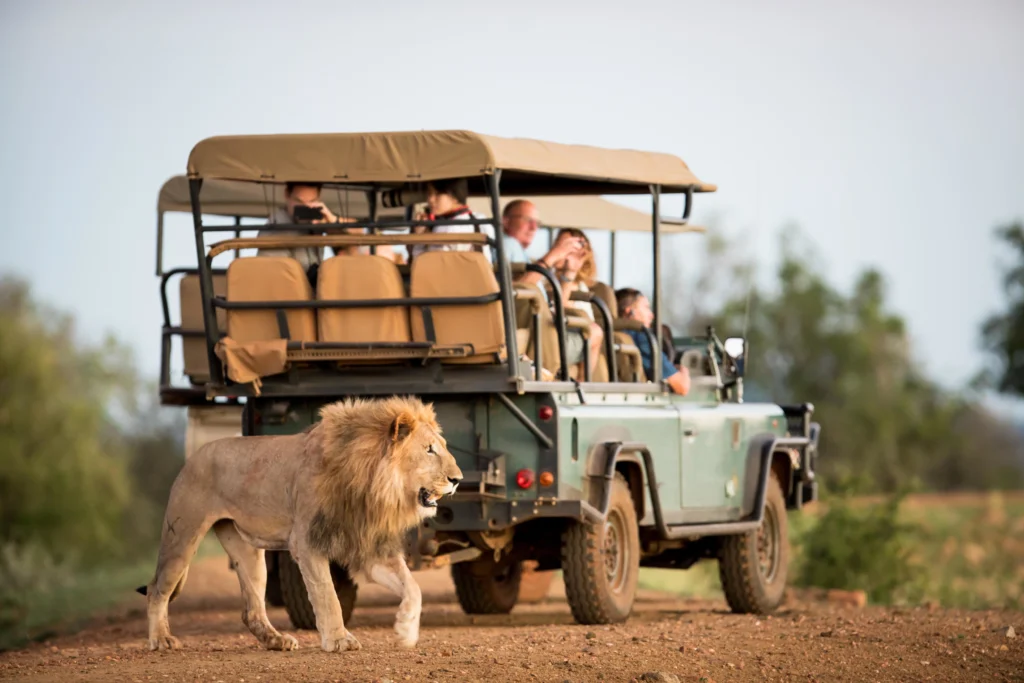
Kruger is, for many travellers, the reason South Africa is on the itinerary at all. Covering nearly 20,000 square kilometres along the border with Mozambique, it’s one of Africa’s largest and oldest game reserves, home to the full Big Five plus an extraordinary supporting cast: cheetah, wild dog, hippo, crocodile and more than 500 recorded bird species. Unlike many East African reserves, Kruger is built for independent travel — a dense network of tarred and gravel roads, well-signed and well-maintained rest camps, and picnic sites with cooked breakfasts available mean you can plan a rewarding self-drive safari without a guide, though guided game drives and walking safaris are widely available for visitors who want a different pace and a trained eye for tracks and behaviour.
The park’s sheer size means experiences vary enormously by region: the southern section around Skukuza sees the most visitors and offers the most reliable sightings thanks to a high density of game and roads, while the far northern reaches around Punda Maria and Pafuri are wilder, quieter, and known for specialist birding and baobab-studded landscapes rather than guaranteed Big Five sightings. Bordering private reserves like Sabi Sand and the Umbabat Private Nature Reserve — where our member property, Nsala Wilderness Camp, sits among the dry riverbeds and indigenous trees of the greater Kruger ecosystem — offer a more exclusive, fenceless alternative for travellers who want luxury lodge comfort alongside unrestricted wildlife movement between properties and the park itself.
For current gate times, road conditions, conservation fees and camp bookings, always check directly with SANParks’ Kruger National Park page, since malaria precautions and seasonal water levels can affect planning for this region more than most others on this list. Winter’s dry season, from roughly May to September, is generally considered the best time for game viewing, as thinning vegetation and concentrated waterholes make animals easier to spot, while summer’s greener landscape favours birdwatchers and photographers happy to work a little harder for their sightings. Most first-time visitors spend a minimum of three nights inside the park to allow for at least two full days of game drives.
10. Blyde River Canyon and the Panorama Route
Just a few hours from Kruger’s western gates, the Panorama Route through Mpumalanga’s escarpment delivers some of the most dramatic viewpoints in the country, making it a natural pairing with a Kruger safari on the same trip. Its centrepiece, the Blyde River Canyon, is one of the largest green canyons on Earth, cutting nearly 800 metres deep in places as the Blyde River winds between forested cliffs. God’s Window offers a near-vertical drop into the lowveld far below on a clear day, Bourke’s Luck Potholes shows off centuries of erosion carved into red rock by the meeting of the Treur and Blyde Rivers, and the Three Rondavels formation — three dolomite peaks resembling traditional thatched huts — anchors the most-photographed stretch of the drive.
The wider route also passes through small towns like Graskop and Sabie, historic centres of the region’s timber and gold-mining past that now serve as comfortable overnight bases, along with waterfalls including Lisbon Falls and Berlin Falls that make easy short detours from the main road. Hot-air ballooning over the escarpment at dawn and zip-lining through the forest canopy near Graskop have both become popular add-ons for travellers with an extra day to spare.
Because the canyon and its surrounding reserve fall under provincial rather than national management, the Mpumalanga Tourism and Parks Agency’s Blyde River Canyon Nature Reserve page is the authoritative source for entry fees, viewpoint access and current road conditions, particularly useful given how quickly escarpment weather and mist can change visibility at the main lookout points. Most travellers combine the full Panorama Route into a single, unhurried day trip from Hazyview or Graskop, ideally timed for the softer light of early morning before mist rolls in, though spending a night in the area allows time for both the main viewpoints and one or two of the smaller waterfall detours without feeling rushed.
Plan Your South African Journey with ATPA
Ten places barely scratch the surface of a country this varied, but they’re a solid starting point for a first, second or tenth visit to South Africa. What ties them together is that each one is looked after by a dedicated authority — a national park service, a heritage museum, a provincial wildlife agency, a municipal tourism board — whose official information should always be your first stop when firming up dates, fees and access, especially since conditions in reserves and coastal parks can shift with weather and season more than travellers expect.
At the African Tourism Professionals Association, our role is to connect travellers with the operators, lodges and guides who know these places on the ground, and to help raise standards across the industry that makes a trip like this possible. That work matters because a smooth, memorable South African journey rarely comes down to the destinations alone — it comes down to the tour operator who plans a sensible route between them, the lodge that gets the small details right, and the guide who knows exactly where to point the vehicle at first light. Verified membership of an association like ours is one way for travellers to shortcut the guesswork when choosing who to book with. Browse our growing network of member tour companies and accommodations across the continent, read more on why African tourism businesses are joining ATPA, or head to our Updates page for more destination guides like this one covering the rest of Africa. If you run a tour company, lodge, airline or tourism school working in South Africa or anywhere else on the continent, we’d love to have you join our network — you can apply for membership here and become part of a growing community committed to responsible, well-run tourism. And if you’d simply like help planning a trip or connecting with one of our verified partners, get in touch with our team — we’re always happy to point travellers toward the people who can show them Africa best.