- DIRECT CONTACTS:
- info@atpa.africa

Top Ranking Places to Visit in Southern Africa
Top Ranking Places to Visit in Southern Africa. Southern Africa is a region of extremes and superlatives. Here you will find the largest curtain of falling water on Earth, the biggest intact inland delta in the world, deserts whose red dunes rise like frozen waves, elephant herds that number in the hundreds and a coastline where two oceans meet beneath a flat-topped mountain. It is a place where a single trip can take you from a glittering city to a wilderness camp where the only sounds are lions calling and hippos grunting in the dark. No wonder it consistently ranks among the world’s most rewarding travel regions.
This guide brings together the top ranking places to visit in Southern Africa, drawing on the experience of the African Tourism Professionals Association (ATPA), the continental body that brings tour companies, hotels, guides and conservation organisations together to grow tourism responsibly. You will discover the region’s most spectacular destinations, learn when to visit each one, see how to link them into a smooth itinerary and find practical advice on visas, health, costs and sustainable travel. Wherever possible, we point you to the official tourism authorities of each country so that you can confirm the latest information before you go.
Whether you are planning a honeymoon, a family safari, a self-drive adventure or a once-in-a-lifetime journey, use this article as your roadmap. You can also explore our full range of African destinations to see how Southern Africa fits into the wider continent.
Why Southern Africa Deserves a Top Spot on Your Travel List
What sets Southern Africa apart is variety. In one region you can watch wildlife on some of the most famous safari reserves in the world, hike up a mountain that overlooks two oceans, cruise on a mighty river, walk among ancient rock art, sample world-class wines, drive through empty deserts and relax on white-sand beaches. The infrastructure is generally excellent, with good roads, well-run lodges and a wide choice of experiences for every budget, and the region’s guides are among the best trained on the continent.
Southern Africa is also remarkably accessible. Major international airports at Johannesburg, Cape Town, Windhoek, Victoria Falls, Lusaka, Gaborone and Maputo connect the region to the rest of the world, and regional flights make it easy to link several countries in a single trip. English is widely spoken, and the safari industry is mature, so first-time visitors feel comfortable while seasoned travellers still find hidden corners to explore. Together, these qualities explain why the region deserves a high place on any list of the best destinations in Africa.
How We Ranked the Top Places to Visit in Southern Africa
To build a fair ranking, we looked at five things: the quality and uniqueness of the experience, the strength of wildlife or scenery, accessibility for visitors, the range of activities available and the destination’s commitment to conservation and community benefit. We also considered how well each place works in a real itinerary, meaning how easily it connects to neighbouring highlights, how good the accommodation is and whether it offers value at different price points.
Rankings are always partly subjective, and your ideal destination depends on your interests. A birdwatcher, a photographer, a family with young children and an adventure seeker will each make different choices. Treat the list below as a well-informed starting point, and use the sections that follow to adjust it to your own taste. If you would like tailored advice, our directory of tour companies is a good place to find verified professionals who can design a route for you.
1. Victoria Falls, Zambia and Zimbabwe: The Smoke That Thunders
Victoria Falls tops many lists of Africa’s greatest natural wonders, and for good reason. Known locally as Mosi-oa-Tunya, “the smoke that thunders”, the falls stretch nearly two kilometres across the Zambezi River and plunge more than 100 metres into a narrow gorge, sending up a plume of spray that can be seen from many kilometres away. During the high-water months, the volume of water is staggering, and the roar is felt in your chest before you even see the falls.
The falls are shared by Zambia and Zimbabwe, and each side offers a different perspective. Zimbabwe’s side provides the broadest panoramic views of the main curtain of water, while Zambia’s side lets you get closer to the edge and, in the right season, swim in the famous Devil’s Pool on the brink. To plan your visit, take a look at the official pages of the Zimbabwe Parks and Wildlife Management Authority and Zambia Tourism for up-to-date entry, safety and activity information.
Best Things to Do at Victoria Falls
Beyond simply admiring the falls, the town of Victoria Falls on the Zimbabwean side and Livingstone on the Zambian side are adventure capitals. You can raft the churning rapids of the Zambezi below the falls, bungee jump or swing from the historic Victoria Falls Bridge, take a helicopter flight over the gorge, cruise the upper river at sunset with a drink in hand, or walk with rhinos and go on game drives in nearby reserves. Cultural visits to local villages and craft markets add depth to the trip.
Timing changes the experience. The falls are at their most powerful from roughly March to May, when heavy spray can obscure the view, while the drier months from around September to December reveal more of the rock face and allow access to Devil’s Pool. Most travellers allow at least two nights, and many combine the falls with Chobe National Park and the Okavango Delta in Botswana for an unforgettable circuit. To find stays that suit your budget, browse our accommodation directory.
2. Okavango Delta, Botswana: Africa’s Watery Wilderness
The Okavango Delta is one of the most extraordinary ecosystems on the planet. According to the Botswana Tourism Organisation, it is the largest intact inland delta in the world, and it swells and shrinks between roughly 15,000 and 22,000 square kilometres depending on seasonal rainfall. It supports an astonishing variety of life, including more than 120 mammal species, over 400 bird species and more than a thousand flowering plants, and it has been recognised as a UNESCO World Heritage Site.
What makes the Delta truly special is that its flood arrives during the dry season. Rain that falls far away in the Angolan highlands travels for months before spilling into the Kalahari sands, turning dry land into a maze of channels, lagoons and islands just when animals need water most. The result is a wildlife spectacle in which elephants wade between islands, lions hunt across flooded plains and hippos wallow in emerald pools, all beneath a huge, luminous sky.
How to Experience the Okavango Delta
There are many ways to explore the Delta, and the best trips mix several of them. Gliding through the reed-lined channels in a traditional mokoro, a dugout canoe poled by a local guide, is the classic experience, silent and intimate, with dragonflies and water lilies at eye level. Game drives, walking safaris on the islands, boat trips and scenic flights each reveal a different side of the landscape, and from the air, the patterns of water and land look like abstract art.
The Delta can be visited all year, but the flood typically peaks between roughly June and August, when water levels are highest, wildlife concentrates on the islands and the weather is cool and dry. The area is famous for exclusive lodges and camps, so it is not a budget destination, but mobile and mid-range options exist. Book early for the peak months, and consider a stay of at least three nights to enjoy a variety of activities.
3. Kruger National Park, South Africa: The Classic Big Five Safari
No list of Southern Africa’s best places would be complete without Kruger National Park, the country’s flagship reserve and one of the most famous wildlife destinations on Earth. According to South African National Parks (SANParks), the park covers nearly two million hectares and supports an extraordinary range of life, including 147 mammal species, 507 bird species, 336 tree species and more than a hundred reptile species. It is home to the Big Five: lion, leopard, elephant, buffalo and rhino.
Kruger is popular partly because it suits so many kinds of traveller. Self-drive visitors can explore its network of roads independently and stay in one of the rest camps, which range from main camps to bushveld camps and bush lodges, while guided game drives, walking trails and luxury private concessions on the park’s borders offer more exclusive experiences. Wildlife viewing is at its best in the dry winter months, from roughly May to September, when vegetation thins out and animals gather at waterholes and rivers. Whatever your style, Kruger delivers dependable sightings and a real sense of wild Africa.
4. Cape Town and the Western Cape, South Africa: Where Mountains Meet Two Oceans
Cape Town is often described as one of the most beautiful cities in the world, and its setting explains why. Table Mountain, a flat-topped icon, rises above the city, the Atlantic and Indian Oceans meet near Cape Point, and the coastline is dotted with penguin colonies, sandy beaches and dramatic cliffs. You can ride the cable car to the summit, visit Robben Island, wander through the Kirstenbosch botanical gardens, stroll the V&A Waterfront or watch African penguins at Boulders Beach, all in a few days.
Beyond the city, the Western Cape is a paradise for food and wine lovers. The Cape Winelands around Stellenbosch, Franschhoek and Paarl produce world-class wines in a landscape of mountain-backed vineyards and historic Cape Dutch estates, while the Garden Route, a scenic stretch of coast with lagoons, forests and beaches, is one of the great road trips of the continent. For the latest travel information, visit the official website of South African Tourism. Cape Town is at its warmest and driest between roughly November and March, making it the perfect complement to a winter safari in Kruger.
5. Chobe National Park, Botswana: Elephant Capital of Africa
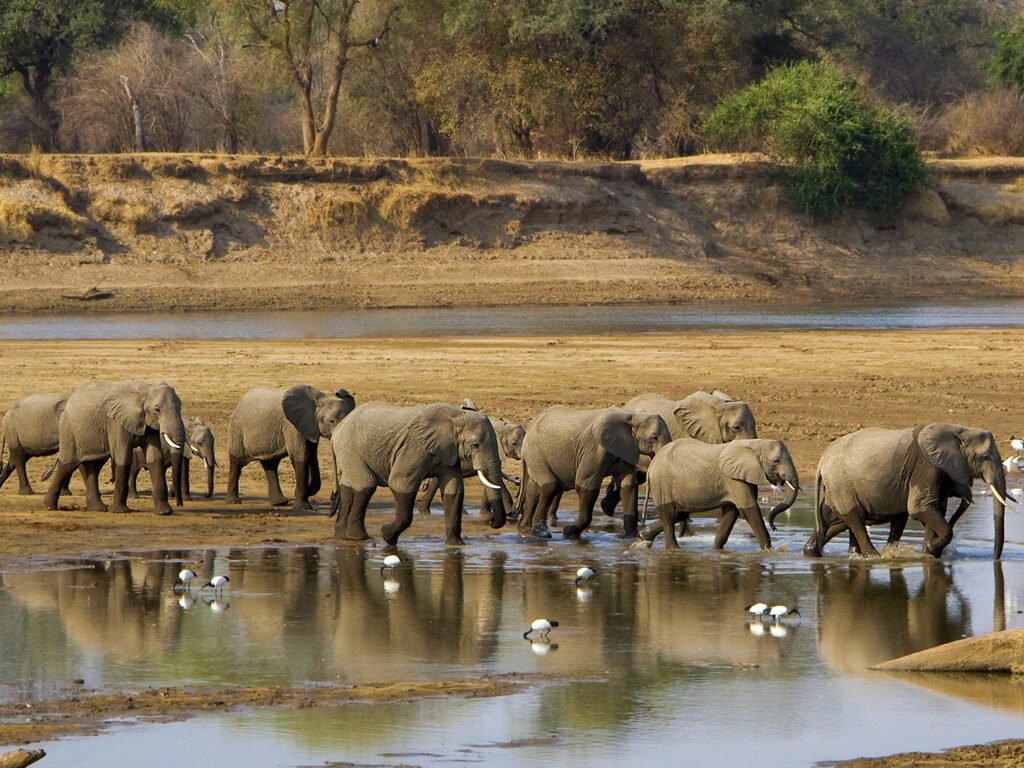
Chobe National Park in northern Botswana is famous for one thing above all: elephants. The Botswana Tourism Organisation describes a park of about 11,700 square kilometres of floodplains, swamps and woodland, where during the dry winter months you may see hundreds of elephants at a time as the herds converge on the river to drink. More than 460 bird species have been recorded, and the river is home to hippos and crocodiles.
The best way to experience Chobe is on the water and on land. Sunset boat cruises along the Chobe River bring you within touching distance of drinking elephants and bathing buffalo, while morning and afternoon game drives along the riverfront reveal lions, giraffes and antelope. Chobe is only a short drive from Victoria Falls, which is why so many itineraries combine the two, and the dry season from roughly May to October offers the best wildlife viewing.
6. Etosha National Park, Namibia: A Waterhole Wonderland
Etosha is Namibia’s number-one wildlife destination, and it is easy to see why. The Ministry of Environment, Forestry and Tourism describes it on its official Etosha National Park page as one of the largest and oldest national parks in Africa, covering 22,935 square kilometres and established in 1907. It supports 114 mammal species and more than 400 recorded bird species, and it has a proud record of black rhino conservation.
At the heart of the park lies a vast, shimmering salt pan, so large that it can be seen from space, surrounded by grassland and woodland dotted with waterholes. In the dry season, animals arrive at these waterholes in a steady procession, and you can sit in a camp overlooking a floodlit pool and watch elephants, rhinos, lions and giraffes come and go throughout the night. Etosha is ideal for self-drive travellers, since the roads are good and the wildlife is easy to spot, and the dry months from roughly May to October offer the best game viewing.
7. Sossusvlei and the Namib Desert, Namibia: Dunes Like Nowhere Else
If Etosha is Namibia’s wildlife highlight, Sossusvlei is its scenic masterpiece. Located in the heart of the Namib, one of the oldest deserts in the world, the area is famous for its towering red sand dunes, some of which rise more than 300 metres above the desert floor, sculpted by the wind into knife-edge ridges. Climbing a dune at sunrise, as the first light turns the sand from purple to orange, is one of the most photographed moments in Africa.
Nearby Deadvlei is a white clay pan surrounded by dunes, where the blackened skeletons of ancient camelthorn trees stand against a deep blue sky, creating an otherworldly landscape that seems to belong on another planet. Namibia also offers the haunting Skeleton Coast, the historic coastal town of Swakopmund, the Fish River Canyon in the south and desert-adapted wildlife such as oryx and springbok. Namibia’s roads are ideal for self-drive trips, but distances are large, so allow plenty of time and plan fuel stops carefully.
8. Hwange National Park and the Matobo Hills, Zimbabwe: Elephants and Ancient Rock
Zimbabwe offers far more than Victoria Falls. Hwange National Park, the country’s largest reserve, is famous for its enormous elephant populations and for the waterholes that draw animals from across the Kalahari sands in the dry season. Lions, leopards, wild dogs, giraffes and countless antelope are also present, and the park is a rewarding stop for travellers who want to combine a wildlife safari with the falls. Information about Zimbabwe’s parks can be found through the Zimbabwe Parks and Wildlife Management Authority.
Further south, the Matobo Hills are a landscape of huge granite boulders and balancing rocks, and they shelter one of the highest concentrations of rock art in the region as well as rhinos and leopards. Great Zimbabwe, the ruins of a medieval stone city, is another cultural highlight and a reminder of the region’s rich human history. Together, these sites make Zimbabwe an appealing choice for travellers who like a mix of nature and heritage.
9. South Luangwa and the Lower Zambezi, Zambia: The Home of the Walking Safari
Zambia is often called the birthplace of the walking safari, and South Luangwa National Park is where the tradition began. The park is renowned for its high densities of leopards, its large herds of elephants and buffalo, its hippo-filled river and its bird life, and it is one of the best places in Africa to experience the bush on foot with an armed guide. Night drives here are legendary, revealing a nocturnal world of genets, civets, hyenas and big cats.
The Lower Zambezi National Park offers a different kind of adventure, with canoe safaris drifting silently past elephants and crocodiles along the river, while Kafue National Park is one of the largest reserves in Africa and a haven for those who like wild, uncrowded landscapes. For official information about Zambia’s destinations, visit the Zambia Tourism destinations page. The dry season from May to October is the best time for wildlife viewing.
10. Lake Malawi, Malawi: The Lake of Stars
Known as the Lake of Stars, Lake Malawi stretches for hundreds of kilometres along the country’s eastern edge, offering clear blue water, sandy beaches and small fishing villages. The lake is famous for its extraordinary diversity of colourful cichlid fish, more species than in any other lake in the world, and for snorkelling, kayaking and diving in the protected waters around Cape Maclear.
Malawi is known as the warm heart of Africa for the friendliness of its people, and it is an excellent choice for travellers who want a slower, more relaxed and affordable holiday. Combine a few days on the lake with a visit to a national park such as Liwonde, where boat safaris reveal elephants and hippos along the Shire River, and you have a well-rounded trip.
11. Bazaruto Archipelago and Gorongosa, Mozambique: Beaches and Bush
Mozambique has one of the longest coastlines in Africa, and its Indian Ocean islands are among the finest beach destinations in the region. The Bazaruto Archipelago offers white-sand beaches, turquoise water, dhow trips and superb snorkelling and diving, with coral reefs and marine life that includes dugongs, turtles and tropical fish. The historic Island of Mozambique, a UNESCO World Heritage Site, adds cultural depth with its mix of African, Arab and Portuguese influences.
Inland, Gorongosa National Park is a striking example of wildlife restoration, where animal numbers are recovering after years of hardship. Mozambique is a rewarding choice for adventurous travellers who want to combine a bush stay with a beach escape, and it makes a natural add-on to a South African trip.
12. Drakensberg and Lesotho: The Kingdom in the Sky
The Drakensberg, a great basalt escarpment on the border of South Africa and Lesotho, is a paradise for hikers, with dramatic cliffs, peaks and valleys, and a wealth of ancient San rock art that has earned it UNESCO recognition. Trails range from gentle walks to demanding multi-day treks, and the scenery is spectacular in every season.
Lesotho, the mountain kingdom surrounded entirely by South Africa, sits at high altitude, with pony treks, remote villages and a culture that has changed little in generations. The winding Sani Pass, a challenging 4×4 route linking the two, is one of the great drives in Southern Africa. Winter can bring snow to the peaks, so pack warm layers whenever you go.
13. Eswatini: Culture, Wildlife and Warm Hospitality
Small in size but big in character, Eswatini offers a rich blend of wildlife and living culture. Its compact parks, such as Hlane Royal National Park and Mlilwane Wildlife Sanctuary, allow visitors to see rhinos, elephants and antelope on foot, on horseback or by bicycle, in a peaceful setting. The country’s traditional festivals, including the Umhlanga Reed Dance, showcase a proud monarchy and colourful customs.
Eswatini is an easy add-on to a South African itinerary, since it sits close to Kruger and the Indian Ocean coast. For travellers who like markets, crafts and community-based tourism, it is a rewarding stop.
Which Southern Africa Destination Is Right for You?
With so many highlights, it helps to match destinations to your interests. Honeymooners often choose the Okavango Delta for its romance and seclusion, followed by a few days of wine and sea views in Cape Town. Families tend to love Kruger and the Western Cape, where accommodation, malaria-free options and child-friendly activities are easy to find. Photographers head to Sossusvlei, Etosha and Chobe for the light, the landscapes and the wildlife concentrations.
Adventure seekers gravitate towards Victoria Falls, with its rafting and bungee jumping, the Drakensberg’s hiking trails and Zambia’s walking and canoe safaris. Travellers looking for relaxation and value may prefer Lake Malawi or Mozambique’s islands. Whatever your priorities, the region has a place that fits, and combining two contrasting stops is often the secret to a truly memorable trip.
Best Time to Visit Southern Africa
Southern Africa lies in the southern hemisphere, so its seasons are the reverse of Europe and North America’s. For wildlife safaris in most of the region, including Kruger, Chobe, Etosha, Hwange, South Luangwa and the Okavango Delta, the best time is the dry season from roughly May to October. Vegetation is thin, water sources are limited, and animals gather at rivers and waterholes, making them far easier to see. Days are warm and sunny, nights can be cold, and the risk of malaria is lower.
The wet season, from about November to April, has its own rewards. The landscape turns lush and green, birdlife peaks, many animals give birth and prices are often lower, although some roads become difficult. Victoria Falls is at its most thunderous from roughly February to May, while Cape Town and the coast are at their best from about November to March. If you want a mix of experiences, consider a winter safari followed by a few days of summer sunshine in the Western Cape, or a shoulder-season trip in April, May or October, when crowds are smaller and conditions are still good.
Sample Itineraries: How to Combine the Top Places
The region is best explored in combinations, and a few classic routes work particularly well. A one-week trip could pair Cape Town with Kruger, offering city, mountain, wine and wildlife in one seamless journey. A ten-day route could link Victoria Falls, Chobe National Park and the Okavango Delta, taking in the falls, the elephants and the waterways of Botswana. A two-week Namibian circuit could take in Windhoek, Sossusvlei, Swakopmund and Etosha, ideal for self-drive travellers who love open roads and wide skies.
For a longer trip of two to three weeks, you can add more countries, such as Zambia’s South Luangwa or Lower Zambezi, Zimbabwe’s Hwange, Malawi’s lake or Mozambique’s islands. Because distances are large, it makes sense to limit yourself to two or three bases and allow at least two or three nights in each. The tours page on our website shows examples of how professional operators shape multi-day trips, and our directory of tour companies can help you find a specialist to build your route.
Visas, Health and Entry Requirements
Entry rules differ from country to country and change over time, so always check with the relevant embassy or official tourism authority before you travel. Many nationalities can obtain visas on arrival or online for countries such as Zambia and Zimbabwe, while South Africa, Namibia and Botswana have their own regulations. Zambia and Zimbabwe have also offered a joint tourist visa scheme for visitors to Victoria Falls, so ask about its current status. Make sure your passport has enough blank pages and is valid for at least six months.
Health preparation is equally important. Speak to a travel clinic well before your trip about routine vaccinations, yellow fever requirements, which can apply if you arrive from certain countries, and malaria precautions, since many wildlife areas, including the Okavango, Chobe, Kruger’s northern reaches, South Luangwa and Lake Malawi, lie in malarial zones. Carry insect repellent, wear long sleeves in the evenings and take comprehensive travel insurance that covers medical evacuation. Follow your doctor’s advice and you will be well prepared.
How Much Does a Southern Africa Trip Cost?
Costs vary widely across the region. South Africa and Namibia are generally the most affordable for self-drive and mid-range travellers, thanks to a wide choice of guesthouses, campsites and rental cars. Botswana and parts of Zambia are known for high-end, low-volume tourism, which means the most exclusive camps and lodges carry premium prices, although budget and mobile options do exist. Victoria Falls, Malawi and Mozambique offer options for every budget, from backpacker hostels to luxury resorts.
To keep your costs sensible, travel in the shoulder season, book accommodation and internal flights early, mix higher-end stays with simpler ones, share vehicles and consider self-drive for parts of the trip. Compare offers across a range of providers, look carefully at what is included and use trusted professionals who can explain the price clearly. You can browse our accommodations directory to compare stay options and speak to operators listed in our members section.
Self-Drive or Guided Safari: Which Is Better?
Both styles have their merits. Self-drive trips, especially in South Africa and Namibia, give you freedom, flexibility and an intimate connection with the landscape, and they can be very affordable. Roads are generally good, and national parks such as Kruger and Etosha are well set up for independent visitors. However, you need to be comfortable with long distances, wildlife safety rules and vehicle basics such as fuel planning and tyre checks.
Guided safaris, on the other hand, are ideal for destinations such as the Okavango Delta, South Luangwa and the Lower Zambezi, where access is by small aircraft, boat or specialised vehicles, and where an expert guide dramatically improves your wildlife experience. A mixed approach is often best: self-drive the well-connected legs and join guided experiences for the remote areas. Whichever style you choose, make sure you understand local rules and follow your guide’s instructions.
Travel Responsibly: Conservation and Community in Southern Africa
Tourism is one of the region’s most important tools for protecting wildlife and supporting communities. Park fees fund rangers, anti-poaching patrols and habitat protection, while community-owned lodges and conservancies give local people a direct stake in keeping wilderness intact. You can multiply the benefits by choosing operators who employ local guides, buy from local suppliers and respect the environment, by avoiding activities that exploit animals and by taking your litter with you.
At ATPA, we believe a happy environment is a happy life for everyone, and we advocate for conservation as a priority in all tourism development. Read more about our approach on our environment protection page, and follow our latest updates for news about sustainability initiatives across the continent, such as the recent story on how Uganda launched a national cleaning day.
How to Choose Trusted Tour Operators and Accommodation
With so many options available, choosing the right professionals is one of the most important decisions you will make. Look for operators who are properly registered, transparent about their prices, experienced in the destinations they sell and committed to responsible practices. Ask for references, read reviews, check what is included and confirm cancellation and safety policies. Be cautious of offers that seem too good to be true, since unrealistic prices often mean cut corners.
ATPA exists to make that search easier. We register and represent qualified tourism professionals across borders, so travellers have a trusted way to identify verified partners. You can learn more about our mission on our about us page, meet our verified members and explore the tour companies and accommodation providers we list. If you run a tourism business, you can find out why African tourism businesses should join ATPA, explore our member trainings and apply for membership.
Combine Southern Africa with East Africa’s Gorillas and Big Cats
Many travellers who fall in love with Southern Africa go on to explore the east of the continent, and it is easy to combine both. East Africa offers experiences that Southern Africa cannot, above all the chance to trek mountain gorillas in Rwanda and Uganda, and to witness the great wildebeest migration in Kenya and Tanzania. A trip that pairs the waterholes of Etosha or the Okavango Delta with a gorilla trek in the misty Virunga volcanoes is one of the most complete wildlife journeys on the planet.
Explore our guides to Rwanda, Uganda and Kenya, or read about Volcanoes National Park, home to Rwanda’s mountain gorillas. Browse our primate safari experiences, or look at the profile of ATPA member Pick and Transfer Safaris, a tour operator working in Uganda and Rwanda. Our full destinations page shows how the continent fits together.
Practical Tips for a Smooth Southern Africa Trip
A few simple habits make a big difference. Book popular lodges and internal flights early, especially for the dry season, since the best camps in Botswana and Zambia fill up months ahead. Pack in layers, because desert and highland nights can be surprisingly cold, and carry a light rain jacket for the wet season. Bring binoculars and a camera with a zoom lens, and use soft bags rather than hard cases if you plan to travel on small planes with baggage limits.
Drive carefully and never at night in rural areas, where animals and pedestrians can be on the road. Carry small denominations of local currency for tips, and remember that tipping guides, trackers and lodge staff is customary and greatly appreciated. Respect local customs, ask before photographing people and keep a respectful distance from wildlife. Finally, keep your itinerary flexible enough to allow for a longer sighting or an unexpected discovery.
Frequently Asked Questions About Visiting Southern Africa
What are the top places to visit in Southern Africa?
The most highly ranked destinations include Victoria Falls, the Okavango Delta, Kruger National Park, Cape Town, Chobe National Park, Etosha National Park and Sossusvlei, with Zambia’s South Luangwa, Malawi’s lake and Mozambique’s islands as rewarding additions.
When is the best time to visit Southern Africa?
For wildlife, the dry season from May to October is best. For Cape Town and the coast, November to March is ideal. Victoria Falls is most powerful from about February to May.
How many days do I need in Southern Africa?
Ten to fourteen days lets you combine two or three highlights comfortably, such as Cape Town and Kruger, or Victoria Falls, Chobe and the Okavango Delta. Three weeks allows a much broader route.
Is Southern Africa safe for tourists?
Millions of visitors travel through the region each year, and most trips go smoothly. As anywhere, take sensible precautions in cities, avoid night driving in rural areas and follow your guides’ instructions on safari. Check official travel advice from your government and local authorities before you go.
Can I visit several countries in one trip?
Yes. Regional flights, good roads and, in some cases, joint visa arrangements make multi-country trips easy. Victoria Falls, Chobe and the Okavango Delta form a classic cross-border circuit through Zambia, Zimbabwe and Botswana.
Do I need malaria tablets?
Many wildlife areas in northern Botswana, Zambia, Zimbabwe, Malawi, Mozambique and parts of Kruger lie in malarial zones, so speak to a travel clinic well before you travel. Cape Town and the Western Cape are generally malaria-free.
Ready to Explore the Top Ranking Places in Southern Africa?
From the roaring spray of Victoria Falls to the silent channels of the Okavango, from Kruger’s Big Five to Sossusvlei’s glowing dunes and Cape Town’s mountain and sea, Southern Africa offers a set of experiences that few regions can match. Choose two or three highlights, allow enough time in each and travel with trusted professionals, and you will return home with memories that last a lifetime.
Ready to start planning? Browse our African destinations, read more travel stories in our travel news and blog, and contact the ATPA team to be connected with verified tour companies and accommodation providers who can turn your dream into a journey to remember.